The master consignment, from the first consignment to the last document
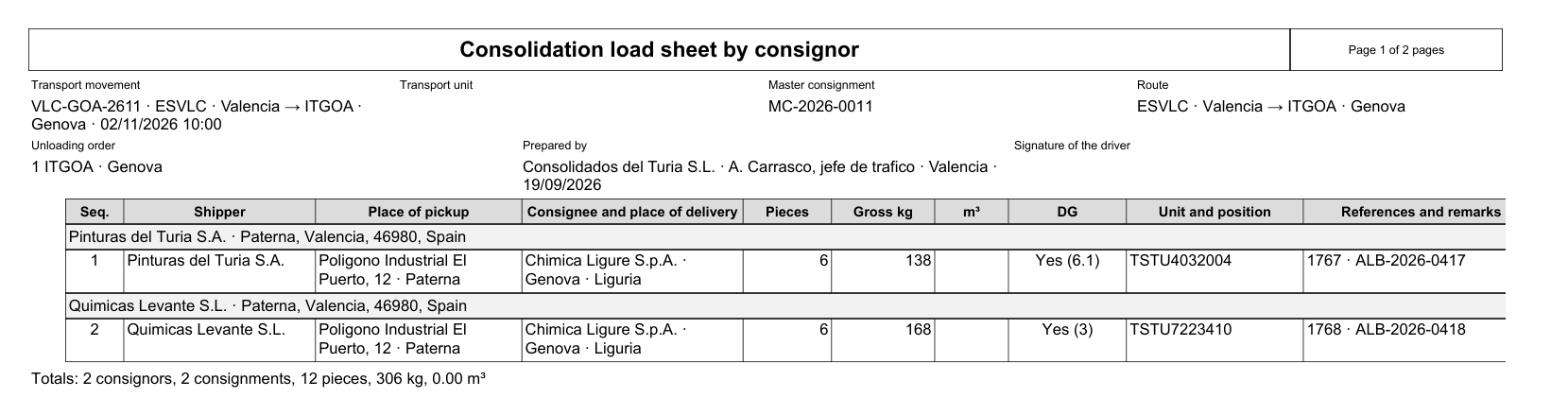
DGAssistant gives the freight forwarder a single place to assemble a master consignment of dangerous goods. The consignments arrive from the shippers, or are created in the application, and are attached to a master consignment that keeps the number of the booking and of the master document.
From there the forwarder decides what goes into each transport unit, checks that the load may travel together and produces the documentation of the whole operation. The responsibility of each declaration remains identifiable, because every package keeps the shipper that presented it.
The master consignment follows an approval circuit —draft, submitted, information requested, pre-approved, final documentation and approved— so that a master consignment is never closed with a consignment that is still missing data.
- Consignments of several shippers grouped under one master consignment, with their house documents.
- Automatic check of segregation inside each unit and between units on board.
- Load sheet grouped by shipper, with the totals of packages, net mass and gross mass.
- History of every transition, with who did it, when and with what remarks.
Road: the 1.1.3.6 threshold calculated for the whole load
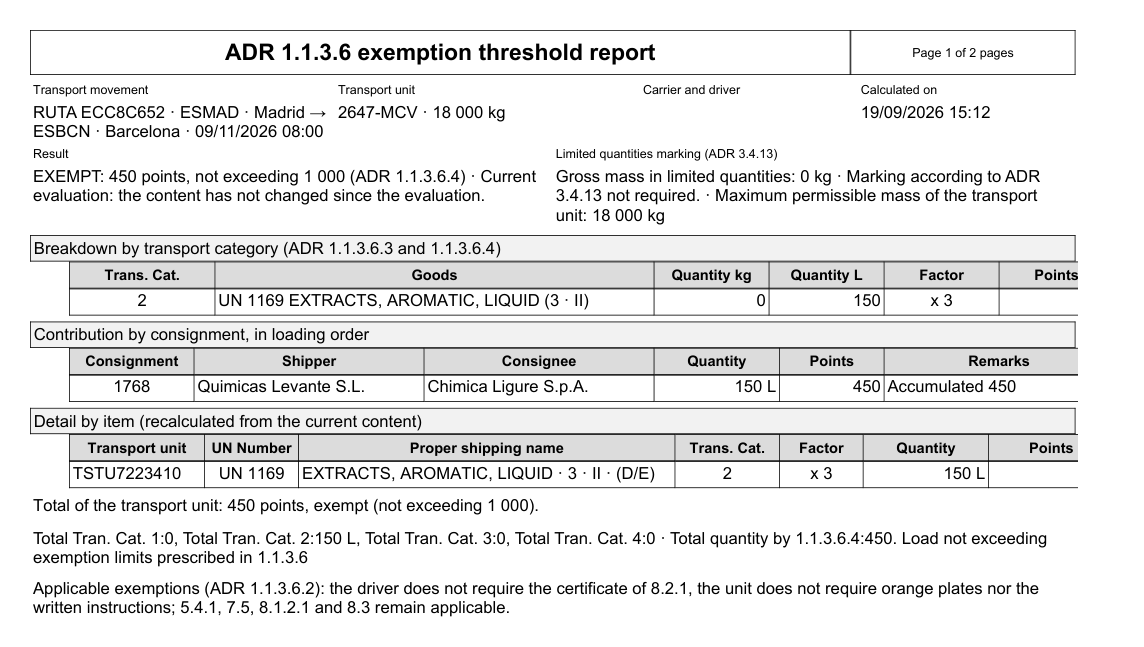
When the master consignment travels by road, the application adds the transport categories of everything loaded and compares the result with the 1 000 point threshold of ADR 1.1.3.6, with the breakdown by category and by consignment.
That tells the forwarder, before the vehicle leaves, whether the journey may travel under the exemption or whether it needs the full regime. The exemption report keeps the exact figure, and the trip restriction sheet gathers the most restrictive tunnel restriction code of everything on board.
The consignment note completes the chain: DGAssistant issues the CMR, the electronic consignment note and, for domestic carriage, the national consignment note from the same consignment.
- Consolidation and booking: master consignments, units and packing certificates.
- Shipping agents and carriers: calls, manifests and restrictions of the trip.
- Consignment notes: CMR, eCMR and national note.
The documents of the master consignment
From the master consignment the application issues the documents that the shipping line, the airline and the terminal expect, all from the data already declared:
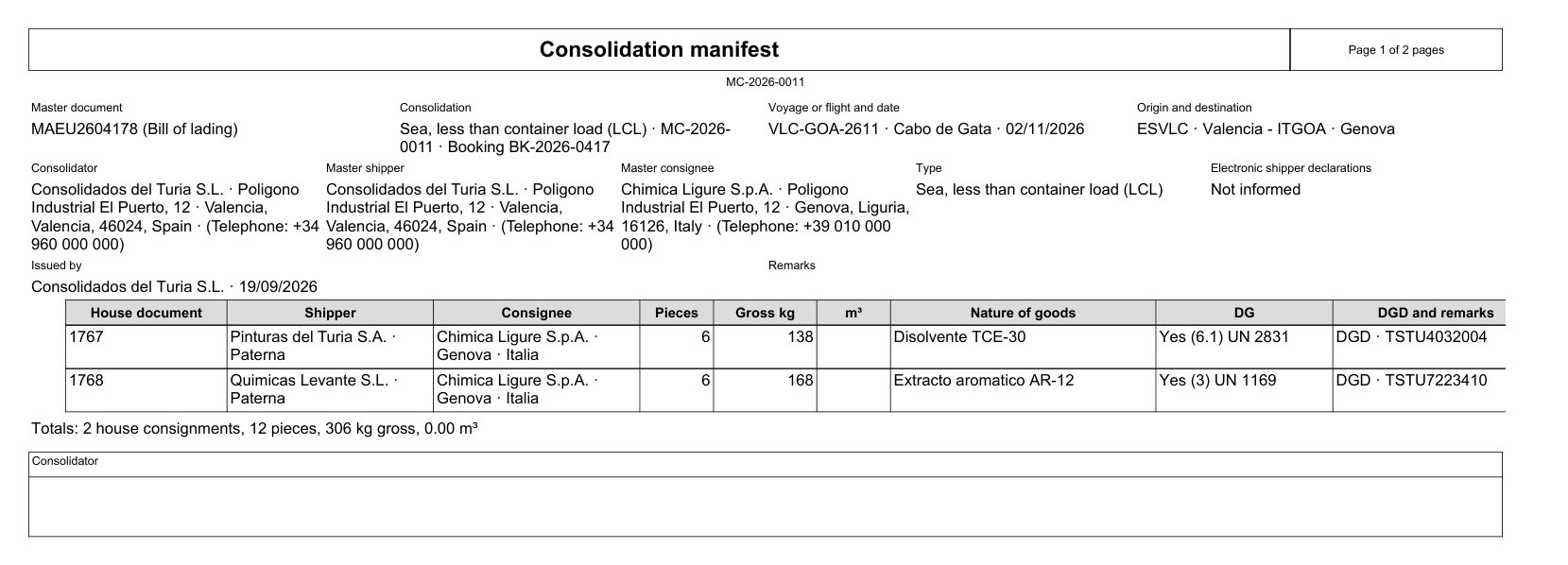
- Consolidation manifest: the house consignments with their shippers, consignees, packages and indication of dangerous goods.
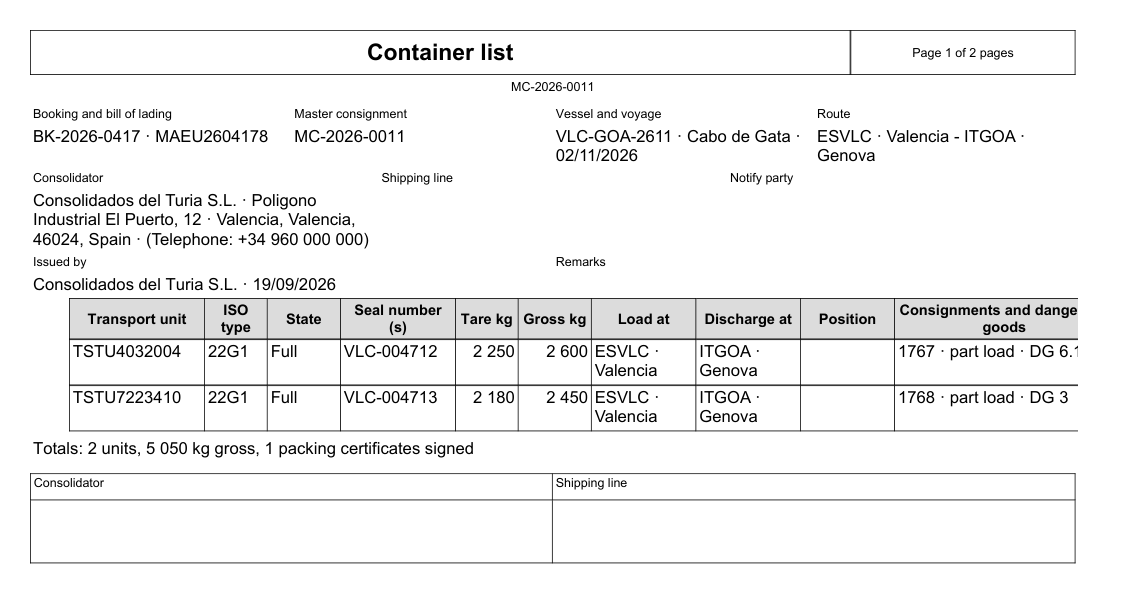
- Container list: the transport units of the master consignment with their seals and their state.
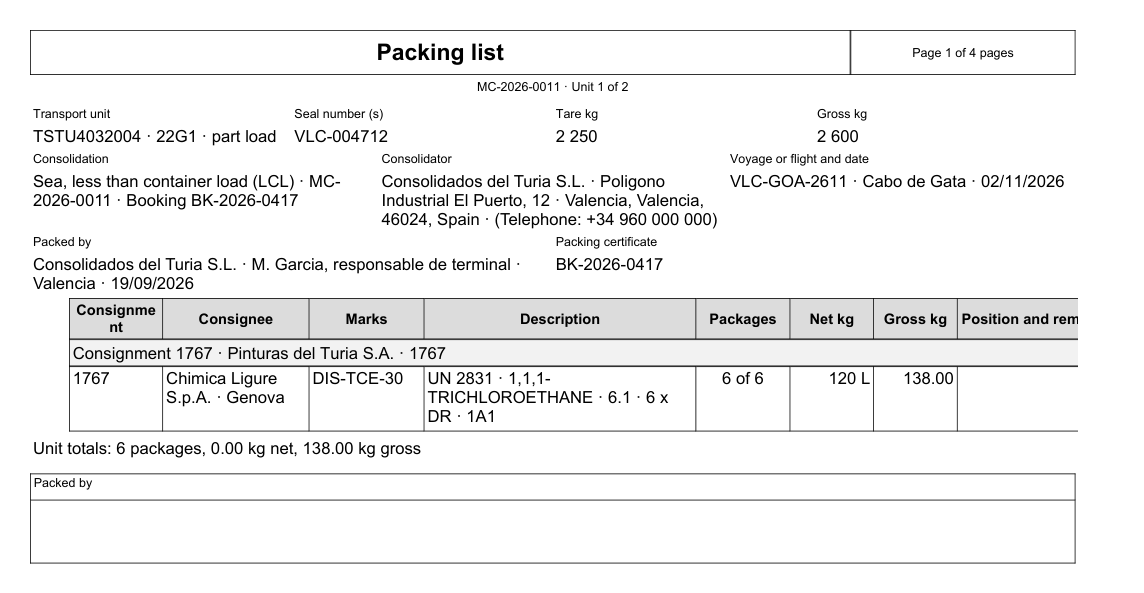
- Packing list by unit: the packages of each house consignment inside every unit.
- Load sheet by shipper: the totals of packages, net mass and gross mass of each shipper.
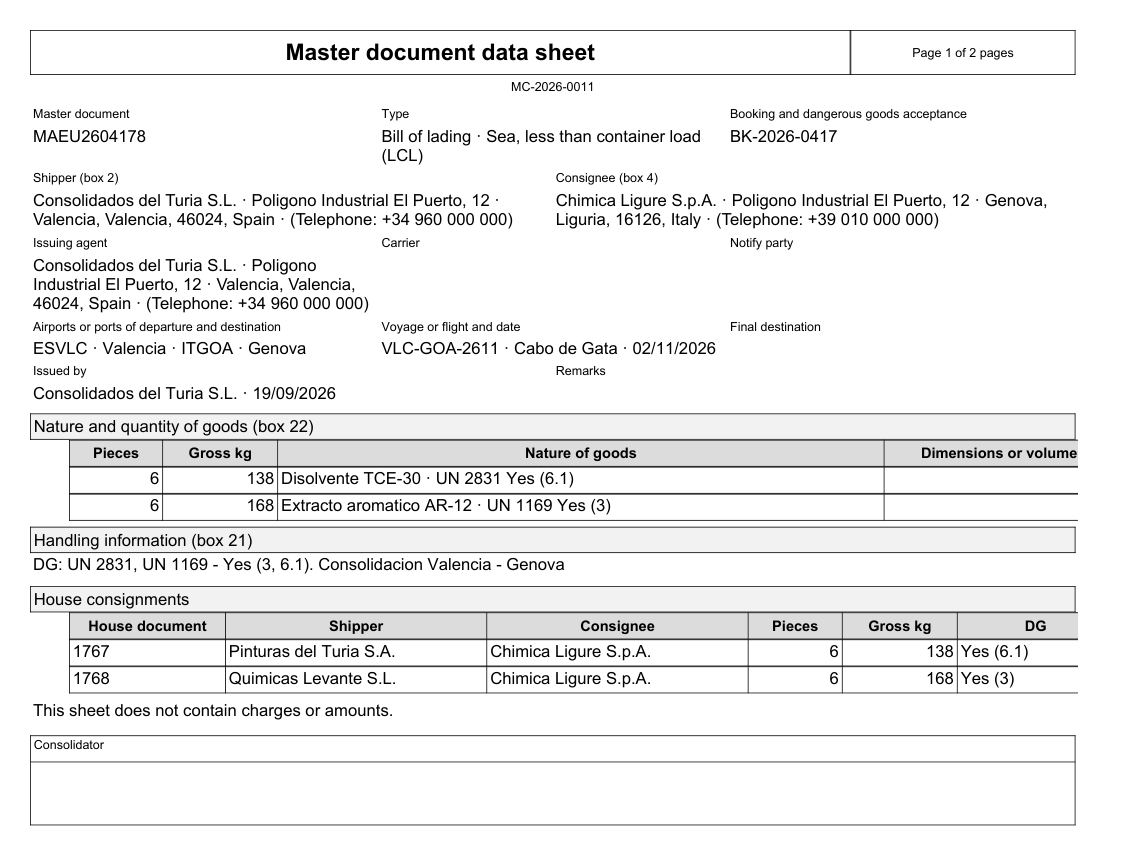
- Master document data sheet: the data of the bill of lading or of the master air waybill.