Dangerous Goods, Chemicals
and Hazardous Waste
Classify once, use in every consignment
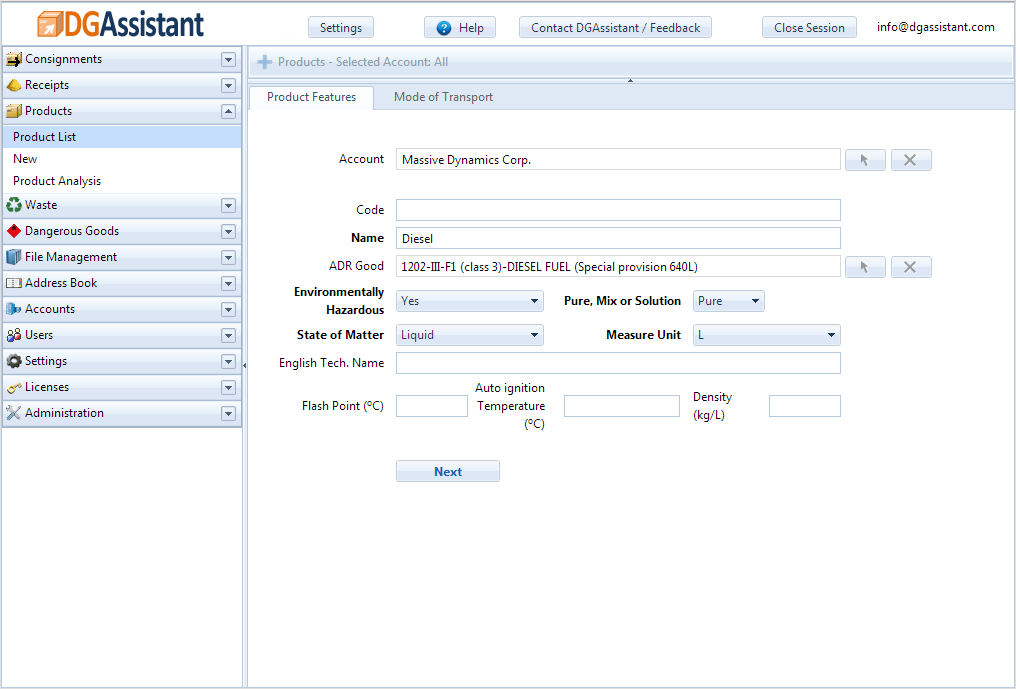
In DGAssistant a dangerous good, a chemical or a hazardous waste is defined only once: UN number, proper shipping name, class, packing group, flash point, quantities and packaging. From then on a consignment or a receipt only needs the number of packages, because the application takes everything else from the product.
That single definition is what keeps the paperwork consistent. The same product produces the same entry in the ADR transport document, in the IMDG declaration and in the IATA declaration, with the wording of each regulation, instead of three descriptions typed by three different people.
A wizard that asks only what applies
The application guides you and shows only the relevant options, saying which data are mandatory for that entry. Classification is the part where mistakes are most expensive, and it is also the part that most often falls on someone who is not a specialist.
Defining a hazardous waste is just as straightforward. Empty uncleaned packagings are simpler still: it is enough to select the hazard labels that apply, without having to name a specific substance.
Products can be copied, deactivated when they are no longer supplied and searched by any of their data, so a catalogue of hundreds of entries stays usable.
The catalogue behind the classification
The classification is supported by the official lists of the regulations: table A of chapter 3.2 of the ADR, the dangerous goods list of the IMDG Code and table 4.2 of the IATA Dangerous Goods Regulations, each with its special provisions, its limited and excepted quantities and its packing instructions.
When a new edition changes a limit, a special provision or a packing instruction, the change reaches your products without you having to review them one by one.