Consignment note for dangerous goods
Two documents that describe the same load
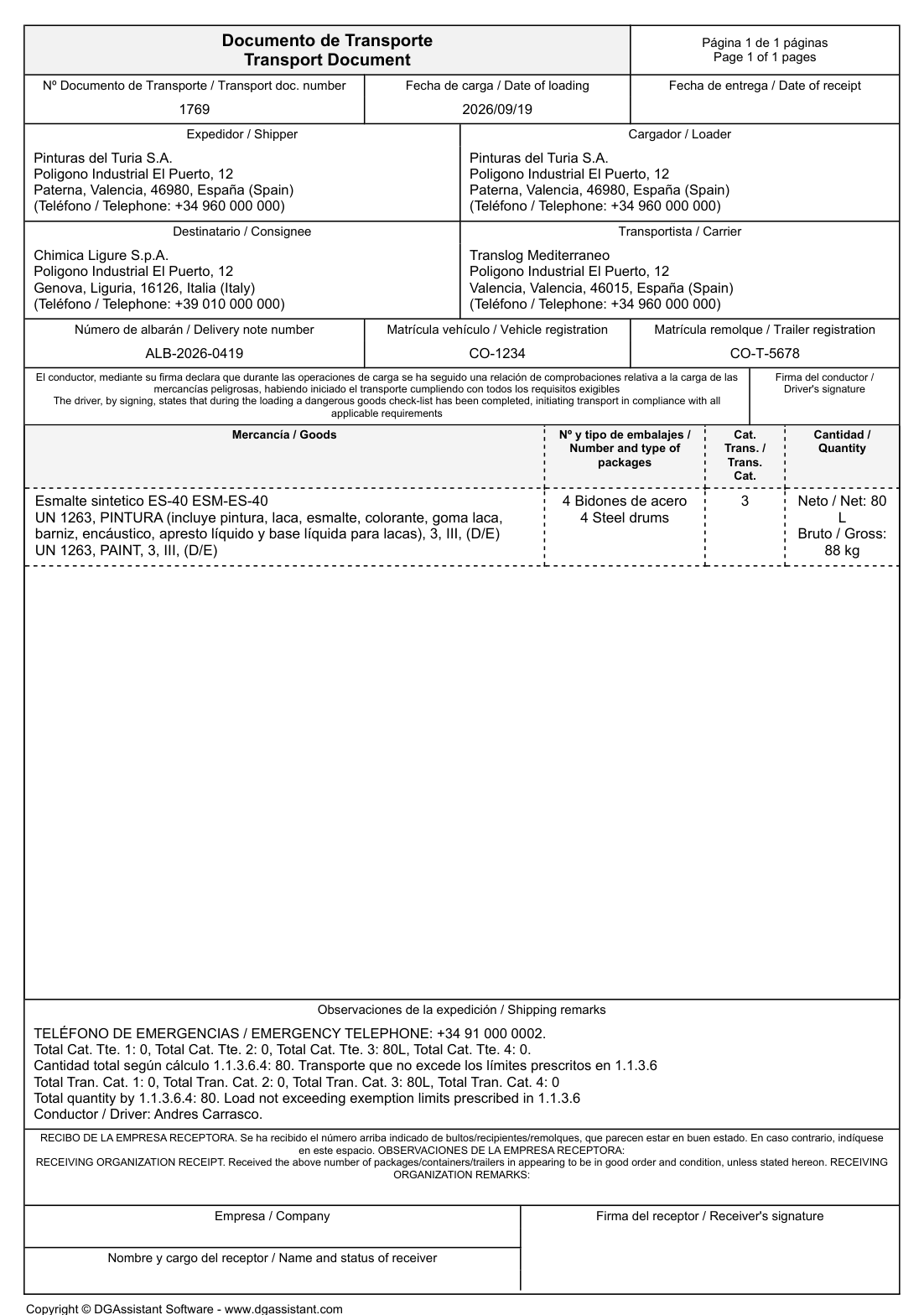
A carriage of dangerous goods by road needs two documents that talk about the same thing: the consignment note, which is the contract, and the transport document of ADR 5.4.1, which describes what is carried in the terms of the regulation. Issuing them separately is what produces the classic discrepancy between the number of packages of one and the other.
DGAssistant issues both from the same consignment. The goods are described once, with the UN number, the proper shipping name, the class, the packing group and the tunnel restriction code, and that description is what reaches the two documents.
What the ADR document adds
The transport document carries the mentions that the regulation requires for each case, and the application decides which ones apply:
- Exemption of ADR 1.1.3.6 with the exact total of points when the load stays below the threshold of 1 000.
- Most restrictive tunnel restriction code of everything carried, which is what governs the route.
- Limited and excepted quantities, empty uncleaned packagings, environmentally hazardous substances and elevated temperature substances.
- Technical names of the goods that require them, and the mention of the competent authority when the entry demands it.
One set of papers for the driver
The ADR document travels attached to the consignment note, so the driver carries one set and not two, and the inspection finds both at the same time. In Spain the same note also carries the data of the administrative control document with its QR code.
If the load changes before departure, the note is regenerated with the goods as they really are, and the previous version is kept so that what was issued at each moment can be shown.
See also the ADR transport document and the guide of consignment notes.