One load, several shippers, one set of documents
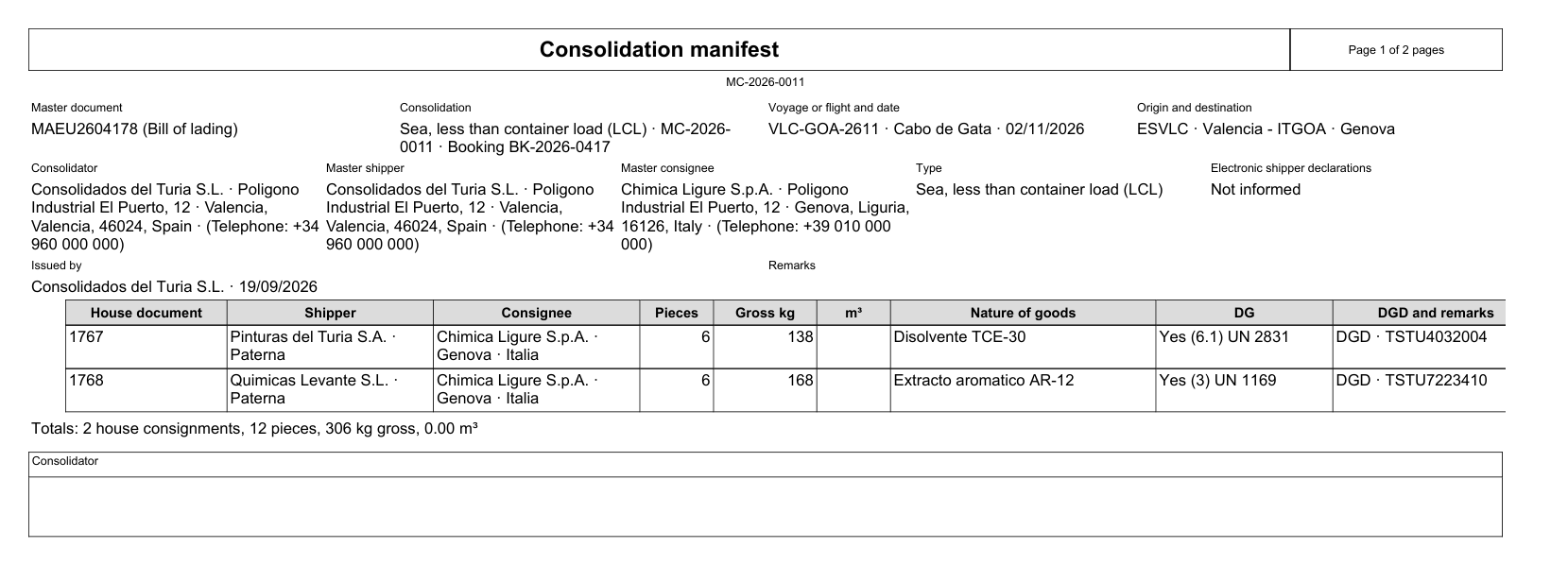
DGAssistant lets a freight forwarder, a consolidator, a shipping agent and a carrier work on the same load without asking anyone to declare the goods twice. Each shipper presents its consignment once, and from that moment the load is grouped, checked and documented as a single operation while every package keeps the shipper that declared it.
The module rests on three objects that mirror what happens in the terminal. The master consignment groups the house consignments of a booking. The transport unit is what physically carries them: a container, a vehicle or a trailer. The trip moves those units, whether it is the voyage of a vessel with its port calls, a road journey or a flight.
Because the three are linked, a change in one consignment reaches the manifest, the packing certificate and the segregation check without anyone reissuing anything by hand.
The documents you can issue
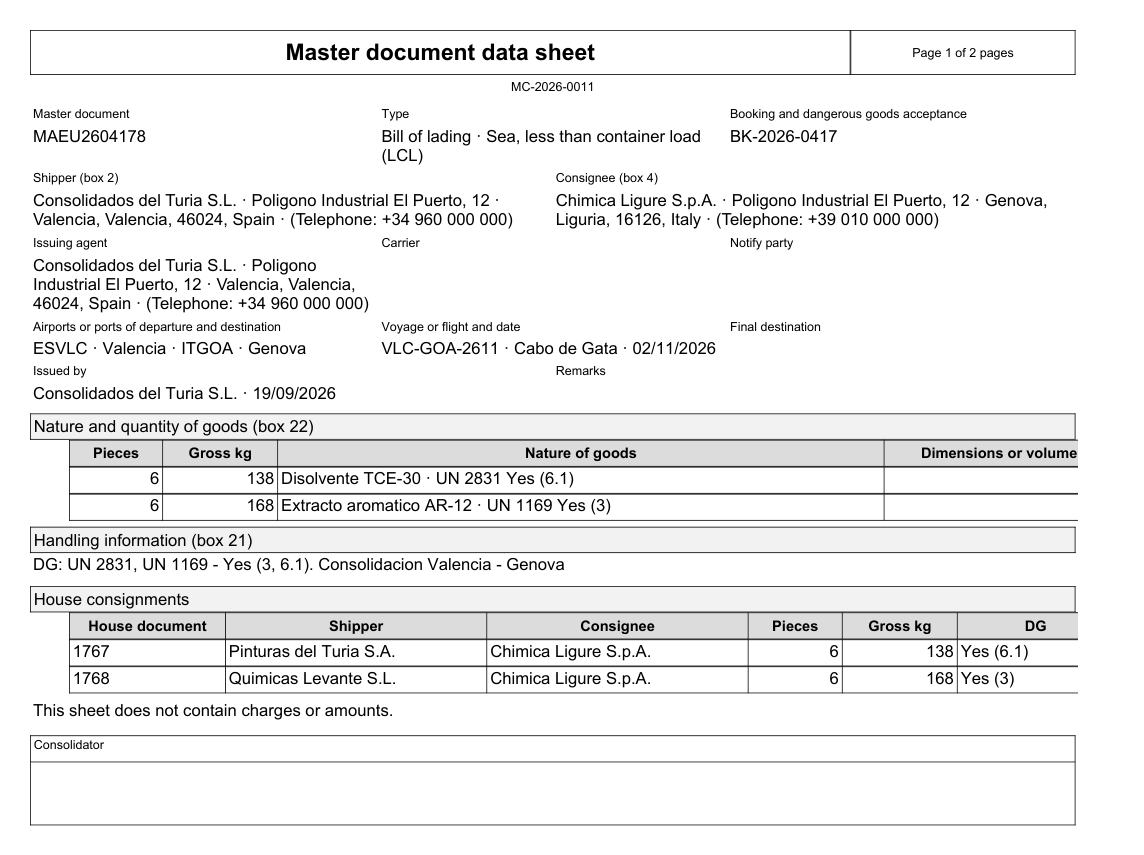
Every document is produced from the data already declared, so the information is never typed again at any step of the chain.
The consignment note travels with them: DGAssistant issues the CMR, the electronic consignment note and the Spanish administrative control document from the same consignment.
- From the master consignment: consolidation manifest, container list, packing list by unit, load sheet and the data sheet of the master document, whether it is a bill of lading or a master air waybill.
- From the transport unit: container or vehicle packing certificate of IMDG 5.4.2, multimodal dangerous goods form, segregation report of the unit, checklist before signing and the labels of the unit.
- From the trip: dangerous goods manifest on the IMO FAL Form 7 of IMDG 5.4.3, segregation report between units on board, exemption report of ADR 1.1.3.6, trip restriction sheet with the tunnel restriction codes, load sheet, notification to the pilot in command of IATA DGR 9.5.1 and the consolidated transport document for road.