A checklist with every consignment and every receipt

DGAssistant creates a thorough verification checklist automatically whenever you create a consignment or a receipt. It can be reviewed on screen, printed with the transport document or printed on its own for whoever supervises the loading.
The list is not generic: it is written for that consignment, with its goods, its packagings, its vehicle and its mode of transport. What does not apply does not appear, which is what makes it usable by the person standing next to the vehicle.
Checklists can also be customised, adding verifications for products that need them because of a particular hazard or because a customer asks for them.
What the application works out for you
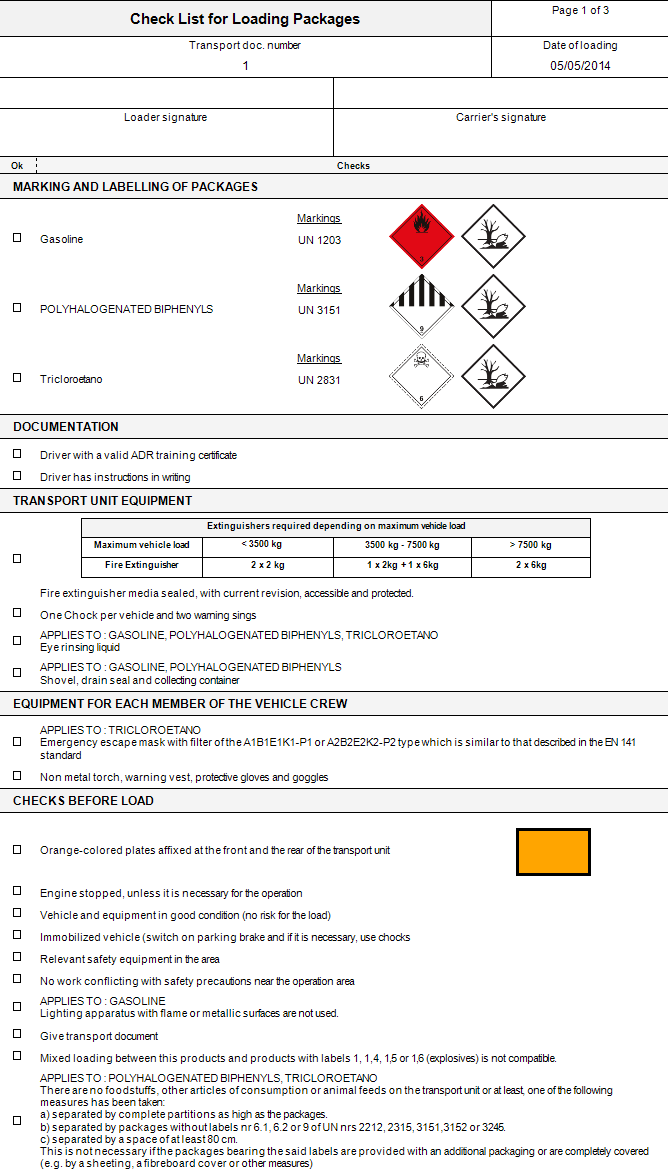
The application analyses the goods, the vehicle and the way they travel -packages, in bulk or in tanks- and resolves the points that are usually looked up by hand:
- The applicable exemptions, so the operation is as simple as the regulations allow.
- Labelling and marking of the vehicle, the containers and the packages, stating how each one goes.
- The packing instructions for packages, and the tank code and vehicle type for tank transport.
- The equipment of the vehicle and of the crew for the goods being carried.
- The actions to be performed before, during and after the operation.