Skip to content

National consignment note and administrative control document

The document that the inspection asks for in Spain
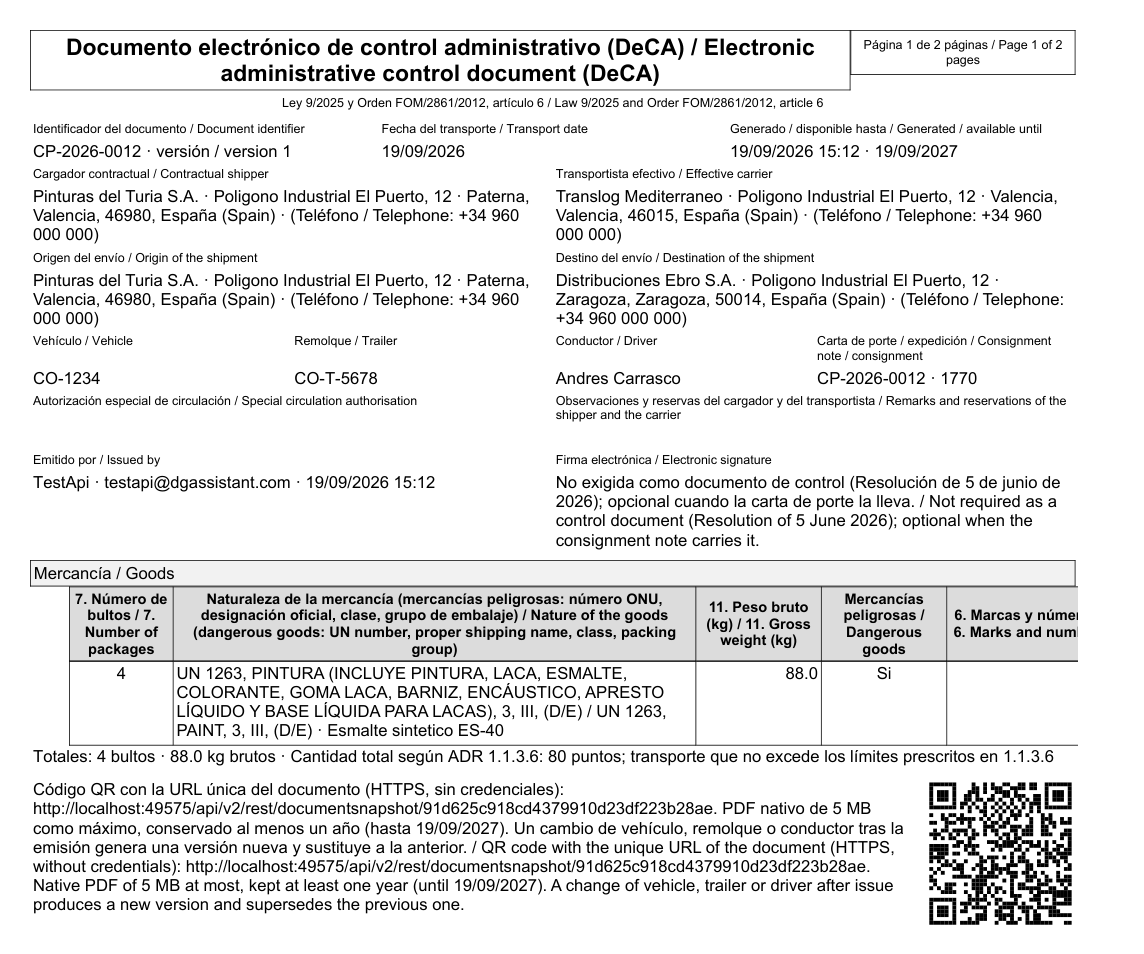
Spanish electronic administrative control document with its QR code, issued by DGAssistant

Domestic carriage of goods by road in Spain travels with an administrative control document, the DeCA, which shows the inspection who contracts, who carries and what is being carried. Until now it could travel on paper; since 5 October 2026 it has to be electronic and born digital, so carrying it only on paper stops being valid.

The technical rules published in June 2026 set what that means in practice: a native PDF that is not a scan, with a size limit, a QR code, digital keeping and access during the inspection. A signature is not a requirement for the document to be valid.

One document instead of two

When the domestic carriage contains dangerous goods, the regulation allows the ADR transport document itself to serve as the support of the administrative control. DGAssistant uses that: it adds the data of the control document and its QR code to the note, so the driver carries a single document that is valid as both.

The QR code links to the electronic file, which is what the inspection reads without depending on the driver having coverage or a printer.

What you have to do

Record the parties in the address book with their tax identification and their addresses, switch on the administrative control document in the consignment and issue the note. The application produces the file already in digital form, with the format that the rule requires.

If the carriage crosses a border, the document that applies is the international consignment note, and the application says so when it checks the places.

The step by step is in the guide of consignment notes.

To see how quick and easy it is, you can have a two week trial without any obligation