
The most advanced and easiest to use IATA transportation software
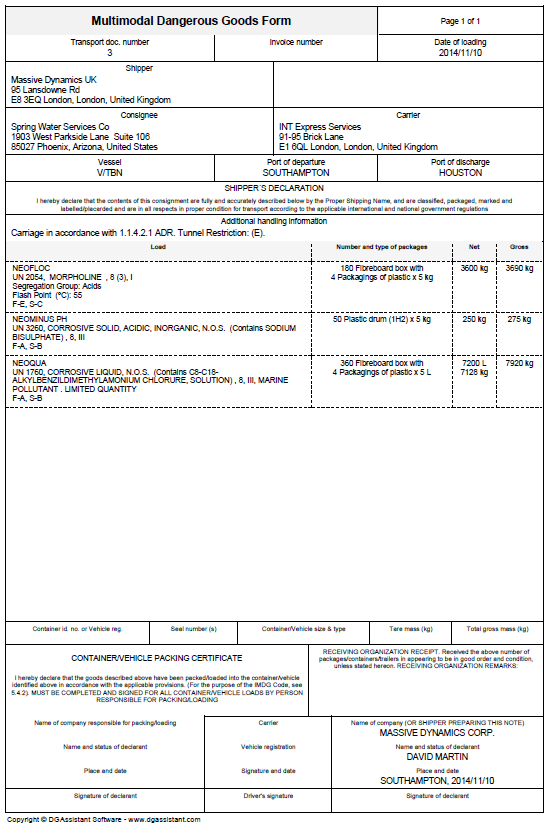
DGAssistant creates the IATA Shipper's Declaration for Dangerous Goods (DGD) for air transport: the most complete system for preparing the declaration, the checklist and the package marking according to the IATA Dangerous Goods Regulations.
Characteristics of DGAssistant for creating an IATA Shipper's Declaration
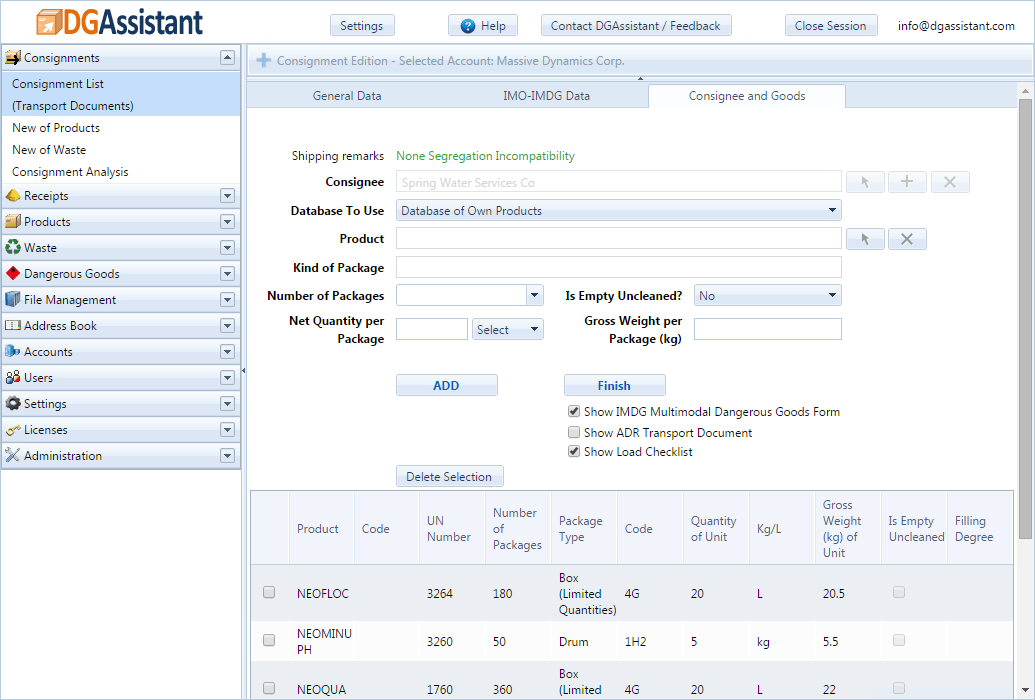
Straightforward: Our exclusive technology SmartDGAssistantTM, automatically determines the information necessary for every situation, and only requests the required data. For example, upon selecting a dangerous good, only the modes of transport valid for that product are shown. It furthermore offers clarification of the meaning of data and will inform you if the document is incorrect, indicating the correct way to resolve the issue.
Quick: Define your shippers, consignees, carriers, products and wastes only once. Then, simply select them when making the shipment and the system does the rest.
Automatic selection of the packing instruction and quantity limits: the application chooses the packing instruction of each entry —first the one for passenger and cargo aircraft and, if the net quantity per package exceeds it, the one for cargo aircraft only— and checks the quantity limits, so that the shipment is declared under the type of aircraft that admits it.
Overpacks: packages may be grouped into overpacks, with the marks and the indications that the Dangerous Goods Regulations require, and the declaration shows the contents of each overpack.
Totaling up: when the same entry appears more than once in a declaration, the system adds up the quantities and shows the total.
All packed in one and automatic Q value: when different hazardous materials travel in the same outer packaging, the application calculates the Q value, rejects the package if it exceeds 1 and prints it on the declaration.
Lithium batteries: lithium ion and lithium metal batteries, on their own, packed with equipment or contained in equipment, under packing instructions 965 to 970 —Sections IA and IB of 965 and 968 and Sections I and II of the others—, with the lithium battery mark on the packages that require it. Section II packages do not appear on the declaration: the application prepares the statement that the air waybill has to carry.
Segregation and explosives: the application checks the segregation of Table 9.3.A inside mixed packings and overpacks, and it supports Class 1 explosives with their compatibility group and the net explosive mass of each package, which it prints on the declaration and on the marking.
One product for every mode: the product is defined once and serves for IATA, IMDG and ADR, so that an air shipment with a road leg leaves with the multimodal declaration. The checklist for loading the packages goes through the marks and the labels of each one, and the authorizations column of the declaration carries the ones you state together with the ones that the application adds on its own.